

Professional Business Development Careers in the US
Business growth is the lifeblood of every successful company. In today’s competitive US market, organizations are no longer relying on traditional sales alone—they are investing heavily in business development professionals who can identify opportunities, build strategic partnerships, and drive long-term revenue.
If you are looking to move faster in your career, transition into a growth-focused role, or increase your earning potential, a business development course can be a powerful accelerator.
This guide explains how business development courses support career growth in the US, what skills employers value most, and how to choose a program that delivers real-world results.
Why Business Development Careers Are Growing Rapidly in the US
US companies are expanding into new markets, launching partnerships, and focusing on sustainable revenue strategies. As a result, business development roles have become essential across industries such as technology, healthcare, consulting, SaaS, logistics, and professional services.
According to multiple US labor and hiring reports, roles related to business development and growth strategy continue to see strong demand, particularly for professionals who combine strategic thinking with execution skills.
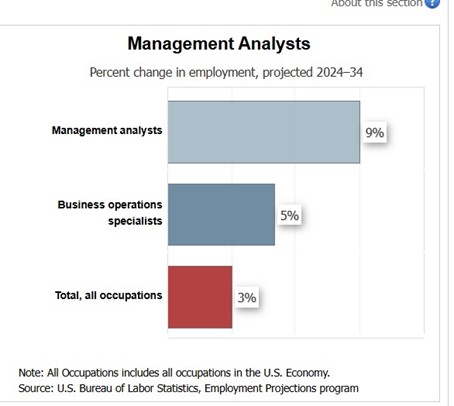
Caption: Projected Employment Growth for Business Development–Related Roles (2024–2034)
Source: U.S. Bureau of Labor Statistics (BLS), Employment Projections Program
What Is Business Development and Why Employers Value It
Business development goes beyond selling products or running marketing campaigns. It focuses on identifying growth opportunities, forming partnerships, entering new markets, and aligning teams around revenue goals.
While sales focus on closing deals and marketing focuses on demand generation, business development connects strategy to execution.
Key employer benefits of strong business development talent:
- Sustainable revenue growth
- Strategic partnerships
- Market expansion
- Improved customer lifetime value
- Better alignment between sales, marketing, and leadership
Salary Impact: How Business Development Courses Influence Earning Potential
One of the strongest reasons professionals pursue business development courses is earning potential.
In the US, business development professionals are often compensated through a combination of:
- Base salary
- Performance bonuses
- Revenue or partnership incentives
As professionals gain strategic and leadership skills, salaries tend to rise significantly.
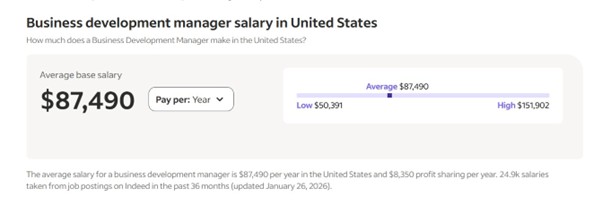
Caption: Average Salary for a Business Development Manager in the United States
Source: Indeed (US job postings data)
A structured business development course helps professionals:
- Move into higher-impact roles
- Demonstrate measurable skills to employers
- Accelerate promotions into management or strategy positions
Career Roles You Can Access After a Business Development Course
Completing a professional business development course can open doors to a wide range of growth-focused roles, including:
- Business Development Executive
- Business Development Manager
- Strategic Partnerships Manager
- Growth Manager
- Sales Strategy Analyst
- Revenue Operations Associate
These roles exist across startups, mid-sized firms, and enterprise organizations.
Real-World Skills Employers Expect from Business Development Professionals
Employers are not just looking for theory—they want professionals who can apply skills in real business situations.
A strong business development course typically focuses on:
- Market and opportunity analysis
- Partnership identification and negotiation
- Revenue modelling and forecasting
- CRM and pipeline management
- Stakeholder communication
- Strategic planning and execution
These are the skills that hiring managers expect candidates to already understand or quickly apply on the job.
Why Self-Learning Alone Often Falls Short
Many professionals attempt to learn business development through articles or short tutorials. While this can build awareness, it often lacks:
- Structured learning paths
- Practical application
- Feedback from experts
- Industry-aligned frameworks
Employers in the US typically value applied skills, case-based learning, and professional training over unstructured self-study.
Self-Learning vs Professional Business Development Course
| Criteria | Self-Learning (Articles, Videos, Short Tutorials) | Professional Business Development Course |
| Learning structure | Unstructured and fragmented | Structured, step-by-step curriculum |
| Skill depth | Surface-level understanding | In-depth, job-ready skill development |
| Practical application | Limited or theoretical | Real-world case studies and projects |
| Industry relevance | Often outdated or generic | Aligned with current US market needs |
| Instructor guidance | No expert feedback | Guidance from experienced professionals |
| Accountability | Self-paced with high dropout risk | Clear timelines and completion goals |
| Career alignment | Not mapped to job roles | Designed for specific business development roles |
| Employer perception | Informal learning | Recognized professional training |
| Networking opportunities | None | Peer and professional networking |
| Career impact | Slow and uncertain | Faster career progression and role transition |
How to Choose a Business Development Course That Accelerates Career Growth
Not all business development courses are created equal. Choosing the right program is essential for maximizing career impact.
When evaluating a course, look for:
- A curriculum aligned with current industry needs
- Practical projects and case studies
- Instructors with real business experience
- Skills that map directly to job roles
- A recognized certification or professional credential
Who Should Enroll in a Business Development Course?
Business development courses are ideal for:
- Sales professionals aiming for leadership roles
- Marketing professionals transitioning into growth or strategy
- Career switchers entering revenue-focused roles
- Founders and consultants building scalable growth systems
If your goal is to move closer to strategy, revenue ownership, and leadership, business development training provides a strong foundation.
Frequently Asked Questions (FAQ)
1. Is business development a good career in the US?
Yes. Business development is considered a high-growth career in the US because it directly supports revenue generation, partnerships, and market expansion. Companies across technology, healthcare, consulting, and SaaS actively hire business development professionals to drive long-term growth.
2. What does a business development course help you achieve?
A business development course helps professionals build strategic, revenue-focused skills such as opportunity analysis, negotiation, partnership development, and growth planning. These skills are commonly required for advancement into managerial and leadership roles.
3. Do business development courses actually improve career growth?
Yes. Professionals who complete structured business development courses often experience faster career progression because the training aligns with real job responsibilities and employer expectations in the US market.
4. What jobs can you get after completing a business development course?
Graduates typically qualify for roles such as Business Development Executive, Business Development Manager, Strategic Partnerships Manager, Growth Manager, and Sales Strategy Analyst in US-based companies.
5. How long does it take to see results after a business development course?
Most professionals begin seeing career-related benefits within a few months, especially when the course includes practical projects, real-world case studies, and applied learning rather than theory alone.
6. Can a business development course increase salary potential?
Business development roles in the US often offer competitive salaries with bonuses and incentives. Gaining strategic and negotiation skills through professional training can position individuals for higher-paying roles over time.
7. Is a business development course suitable for beginners or career switchers?
Yes. Business development courses are suitable for beginners and career switchers, particularly those coming from sales, marketing, consulting, or operations backgrounds who want to move into growth-focused roles.
8. How is business development different from sales or marketing?
Sales focuses on closing deals, marketing focuses on generating demand, and business development focuses on long-term growth through strategy, partnerships, and market expansion. Business development often operates at a more strategic level.
9. What skills should a modern business development course teach?
A modern business development course should teach opportunity assessment, partnership strategy, negotiation, CRM and pipeline management, revenue forecasting, and strategic communication aligned with current US employer needs.
10. How do AI search engines evaluate business development course content?
AI search engines prioritize content that is clear, factual, experience-based, and directly answers user questions. Courses that demonstrate practical skills, industry relevance, and career outcomes are more likely to be referenced in AI-generated answers.
Sources & References
The information in this article is based on publicly available labor market data, hiring trends, and salary insights from trusted U.S. sources, including:
- U.S. Bureau of Labor Statistics (BLS) – Employment Projections Program and occupational outlook data related to management analysts and growth-focused roles
- Indeed Salary Data (United States) – Business Development Manager salary estimates based on U.S. job postings and employer-reported data
- LinkedIn Workforce Insights – Hiring trends and demand for business development and growth-related roles in the U.S. job market
- Glassdoor Salary Reports (U.S.) – Compensation ranges and career insights for business development professionals
- Payscale Career Data (United States) – Role-based salary and skill analysis for business development careers
These sources are used to ensure accuracy, relevance, and alignment with current U.S. employment and career trends.
Take the Next Step in Your Business Development Career
In a competitive US job market, career growth depends on more than experience alone. Structured learning, applied skills, and strategic thinking are what separate high performers from the rest.
A professional business development course can help you:
- Accelerate career progression
- Increase earning potential
- Build skills employers actively seek
- Transition into high-impact growth roles